



When heavy duty motion applications require tons of force and synchronization of multiple lift points, designers often choose mechanical screw jack systems over hydraulic or electromechanical options. Without using fluids or communications networks, screw jacks can operate in multi-unit configurations, combining forces to move unwieldy loads exceeding 100 tons. Getting maximum value from screw jacks requires understanding their unique strengths and configurability options.
The case for screw jacks
For moving megaton loads cost effectively, motion designers often turn to hydraulic cylinders, but the pumping and hose infrastructure needed to support them adds costs and complexity, especially in consideration of energy costs from the need for pumps to be running whether or not the cylinder is in use. Extending the support infrastructure to synchronize multiple hydraulic cylinders is also complex and costly. There are also significant maintenance and hazard risks related to handling hydraulic fluids.
For handling loads up to approximately 60 kN (6.7 tons), electromechanical solutions can be an option. They can host built-in microcomputers, which give them tremendous synchronization capabilities. With only one wire other than the power supply, they can connect to and synchronize multiple actuators. A designer could, for example, program the motion of a large work platform supporting multiple workers assembling an aircraft fuselage. The platform could be automatically balanced as workers move to the different parts of the plane. Doing so, however, requires deploying a motor, encoder and sensor on each actuator. If the application does require programmed synchronization, such intelligence would be overkill for most multi-ton applications.
For synchronizing multiple, unwieldly loads surpassing 60 kN, mechanical screw jacks are the ideal alternative. A single jack can handle more than 50 tons itself and much more in tandem with other jacks. In conjunction with a servo motor or complex control panels, these can participate in programmed moves.
What makes screw jacks so tough?
Screw jacks trade speed for strength. They typically derive torque from an AC motor, but DC, servo, hydraulic or any other motor will work. The motor turns a worm gear, which meshes with a worm wheel to drive an internally threaded sleeve. In one configuration, the screw itself moves the load. In another, a nut that attaches to the load travels along the screw thread to move the load.
The screw can be either an acme or a ball screw. (Figure 1) Acme screws are simpler and more cost effective. They have a higher friction coefficient than ball screws, which can potentially make them self-locking. Since an acme nut is a simple wear component, the wear can be measured, allowing technicians to determine when the nut has reached its full life.
Ball screws, on the other hand, are more efficient, and thus require a smaller drive train and motor. This all allows for higher-speed operation. Since ball screws use ball bearings, life expectancy can be calculated. This makes it easier to predict wear, implement preventative maintenance and plan replacement programs. Although the initial cost can be higher, the higher efficiency means that they can meet torque requirements with a lower-cost drive train and motor, faster cycle times, and predictable life expectancy.
Key to the mechanical advantage of screw jacks is the high gear ratio of the gear box, which can range from 5:1 to 40:1. Travel length of the screw could be from just a few inches to 20 feet, limited only by the length of raw materials for threaded shafts that are typically shipped. By special order, vendors can extend length much further (> 50 feet).
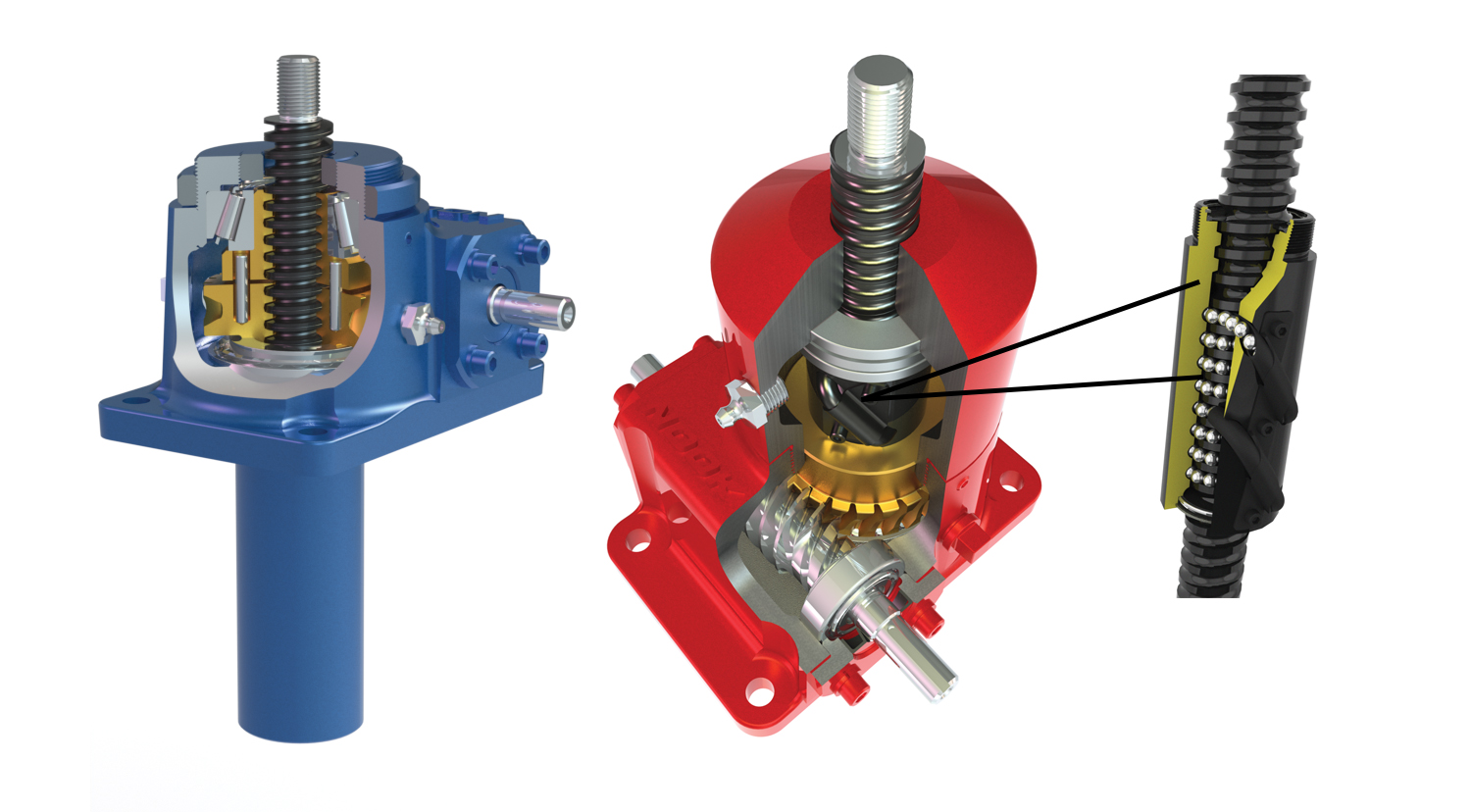
Figure 1. Machine screw jacks (left) use a threaded metal shaft and nut, which is very economical but provides high friction and low efficiency. Ball screw jacks (right) are more expensive, but their use of rolling balls reduces friction and improves efficiency.
Configuring multi-jack systems
Figure 2 shows examples of common screw jack configurations, including straight line, U, T and H arrangements. Each unit can integrate acme screw and ball screw jacks, gearboxes and keyed link shafts all driven mechanically by a single motor, something that only screw jacks can do cost efficiently. When deployed in tandem, each jack adds an increment of its capability, so where one jack can handle 50 tons, five jacks coordinated can move more than 200 tons.
Using standard bar stock, keyed link shafting is typically less than 12 feet but can extend to a maximum of 20 feet. With custom joints, however, bars can extend to 50 feet or more. A more typical configuration would be four to six screw jacks spaced four to six feet apart. Any further apart the jacks are spaced from the motor, your system may experience lags in performance.
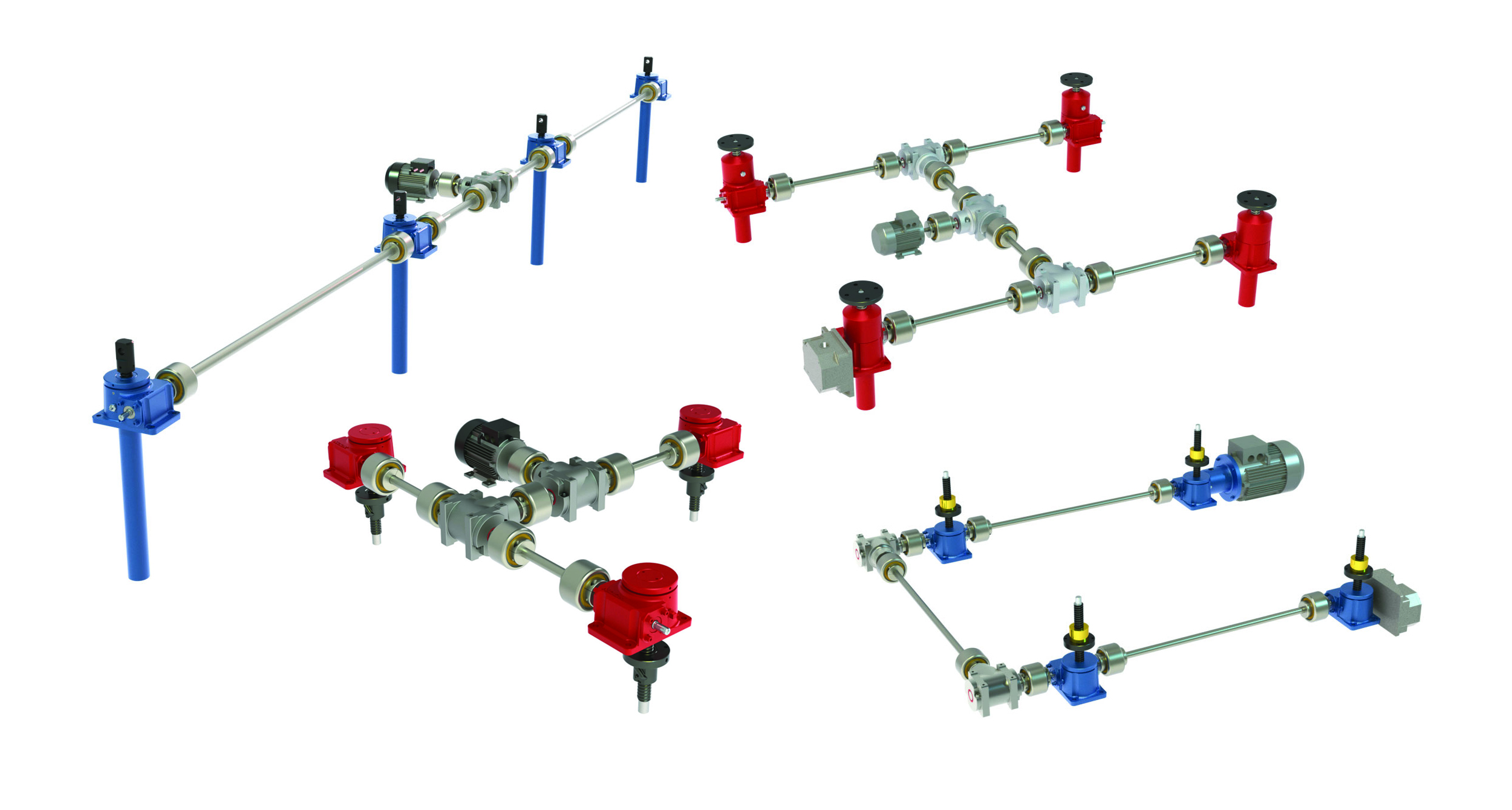
Figure 2. Configuring screw jacks can be an ideal solution in load handling for your application.
A designer could build a base configuration by identifying load points and specifying the type of screw jacks they need to bring it together. Screw jack vendors often provide templates, giving designers a place to start. Working with the vendor engineering teams and online configuration tools, the designer can configure the dimensions of the jacks and components that will be necessary to provide the lift. While the design usually starts with off-the-shelf components, the arrangement could require custom machining (e.g. journalling to contact the load or varying the length of the couplers). Once core dimensions are known, integration of the following accessories can add functionality:
- Control panels from which the operator can jog incremental movements
- Limit switches to set the length of the stroke
- Counters and encoders to provide position details
- Hand wheels for manual drive options
Some vendors can provide the entire system as a completed assembly, including motor, gearboxes, couplings, shafting and the jacks, which can be the most cost-effective solution. The vendor can also perform all of the calculations, is best equipped to provide the necessary customizations and accessories, and issue a warranty.
Applications
The following are among the many extremely heavy duty applications (Figure 3) that can benefit from synchronization of multiple jacks:
- In construction or bridge maintenance, multiple screw jacks help position large bridge segments or components, ensuring they are in the correct position before permanent connections are made.
- In positioning heavy machinery like CNC machines, multiple screw jacks lift and level equipment for maintenance or installation, ensuring that large machines align properly and are stable.
- In other industrial settings, screw jacks can combine to adjust the height and level of large work platforms or industrial workstations, allowing for precise positioning of heavy loads or equipment.
- On the assembly line, a platform with multiple screw jacks might help lift and support heavy components while workers safely perform assembly tasks.
- In aircraft maintenance, multiple screw jacks might help lift and support the fuselage or wings of the aircraft for inspection, repair or modification.
- In warehousing, multiple screw jacks help to move and position heavy pallets or reach items on storage racks.
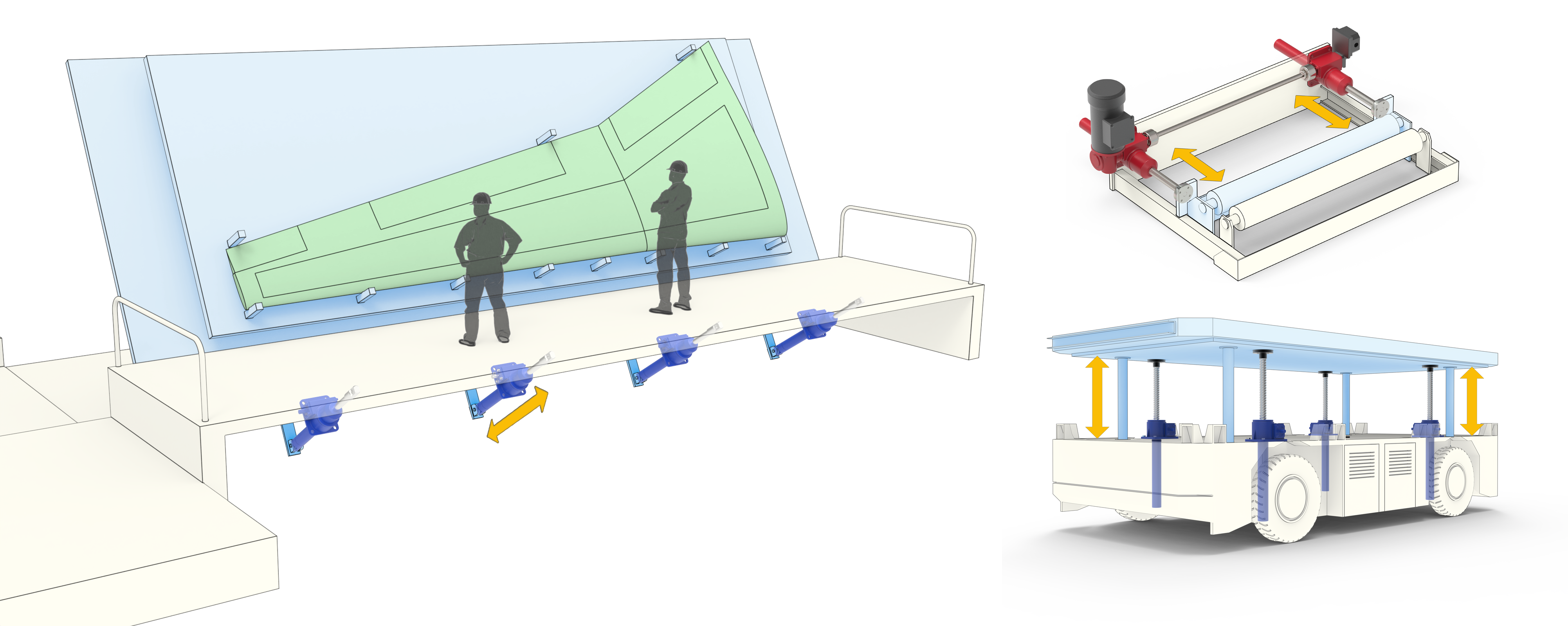
Figure 3. Screw jacks, especially when utilized in multi-jack configurations, are ideal for a number of heavy duty applications with larger load handling requirements.
Your new heavy duty go-to If you have been thinking about deploying either multiple hydraulic cylinders or electromechanical systems to lift heavy and unwieldy objects, consider doing so with screw jacks. Gear ratios of up to 40:1 enable load handling of more than 200 tons without backdrive, and mechanical assemblies enable operation of multiple jacks in unison.
Whether you need to jog a fleet of jacks to handle extremely heavy loads once a month or coordinate motion throughout the day, screw jacks can be a low-cost, high-performance solution for you. This especially rings true if you can find a vendor that guides you through the design process and delivers a fully assembled solution.